 how-to
How to Get a Learner's Permit in SC: Step-by-Step
Table of Contents
- South Carolina Beginner's Permit Requirements: Age and Eligibility
- Gather Your South Carolina Beginner's Permit Documents
- Complete Your Application and Schedule Your Vision and Knowledge Test
- South Carolina Permit Test Practice: What to Study
- Pass Your Vision Screening and Knowledge Test
- South Carolina Beginner's Permit Restrictions and Supervised Driving Rules
- Next Steps: Preparing for Your Road Test
- Frequently Asked Questions
Last Updated: October 14, 2026
South Carolina Beginner's Permit Requirements: Age and Eligibility
Learning how to get a learner's permit in SC is the first step toward becoming a licensed driver. To qualify, you must meet age and residency requirements set by the South Carolina Department of Motor Vehicles (SCDMV).
In South Carolina, you must be at least 15 years old to apply for a beginner's permit. Your parent or guardian must sign off on your application and consent to your supervised driving.
Meeting the minimum age is just the start. You'll also need to prove South Carolina residency and have the right documents ready before you visit a driver's license office.
Gather Your South Carolina Beginner's Permit Documents
To learn how to get a learner's permit in SC, bring original documents to the driver's license office. The SCDMV requires proof of identity, citizenship, Social Security number, and residency.
Proof of Identity and Citizenship
The SCDMV will ask for one of these as proof of identity:
- Valid passport
- Birth certificate (original or certified copy)
- Military ID
- Certificate of naturalization or citizenship
A birth certificate is the most common choice for teenagers. Without an original, you'll need a certified copy from the vital records office in your birth county.
Citizenship proof often overlaps with identity documents, your birth certificate serves double duty. If you were born outside the United States, bring a passport or naturalization certificate.
Proof of Social Security Number and South Carolina Residency
Bring your Social Security card or a document showing your number, such as a tax return or W-2.
Proof of South Carolina residency is also required. The SCDMV accepts several documents for this:
- Utility bill (electric, gas, water, or internet)
- Lease or rental agreement
- Mortgage statement or property tax bill
- Student ID with your address
- School report card with your address
- Bank statement with your name and address
These documents must show your current address and typically be dated within the last 60 days. If you recently moved, bring your most recent bill or statement.
Complete Your Application and Schedule Your Vision and Knowledge Test
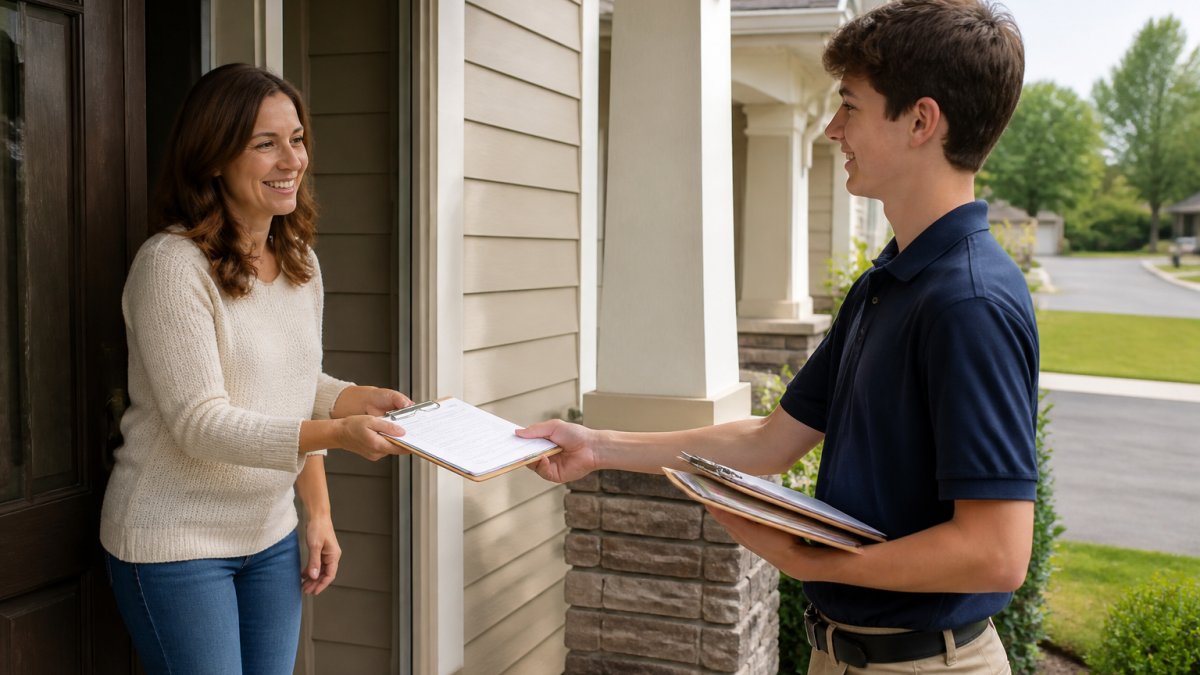
The SCDMV application asks for your personal information, address, and Social Security number.
If you're under 18, your parent or guardian must sign the application, consent required by law.
Once you submit your application, you'll schedule two tests: a vision screening and a knowledge test. Many offices allow online scheduling.
At Aiken Driving School, we offer permit preparation classes that help you understand what to expect on test day.
South Carolina Permit Test Practice: What to Study
The knowledge test covers traffic laws, road signs, and safe driving practices. Study the official South Carolina Driver's Manual.
The manual covers these key topics:
- Road signs and their meanings
- Traffic laws and speed limits
- Right-of-way rules
- Safe driving techniques
- Parking rules
- Pedestrian safety
Practice tests are available through the SCDMV website. Taking several helps you identify weak areas, and most mirror the actual test format.
Study tips that work:
- Review one section of the manual each day
- Take practice tests multiple times until you score consistently high
- Focus on road signs, they make up a large portion of the test
- Ask your parent or guardian to quiz you
- Study in short sessions rather than cramming the night before
Pass Your Vision Screening and Knowledge Test
Test day at the SCDMV office follows a predictable sequence. Here is what happens, in order.
Step 1: Check in and present your documents
Bring your completed application and every original document from your checklist. Staff review identity, citizenship, Social Security number, and residency proof before you test. If a document is missing or expired, you cannot test that day.
Step 2: Vision screening
An SCDMV staff member checks your eyesight on a standard vision machine before the knowledge test. Wear your glasses or contacts, the screening uses your corrective lenses, and your permit will carry a corrective-lens restriction if you need them to pass.
If you do not meet the minimum vision standard, you cannot take the knowledge test that day. Schedule an optometrist appointment before your SCDMV trip if your prescription is more than a year old.
Step 3: The knowledge test
The test is multiple choice on a computer and covers material straight from the official South Carolina Driver's Manual: road signs, traffic laws and speed limits, right-of-way rules, safe driving techniques, parking rules, and pedestrian safety. Results appear on screen immediately.
Step 4: If you pass
You receive your beginner's permit the same day in most offices. Before you leave, confirm the expiration date printed on your permit and whether any restrictions (corrective lenses, for example) were added.
Step 5: If you fail, retesting rules
Failing the knowledge test resets your timeline. A common pattern is a short waiting period before retesting and a limited number of attempts before additional requirements kick in. Because these rules are set by the SCDMV and can change, verify the current retest wait and attempt limit with the SCDMV or your local office before you rebook.
What to do between attempts:
- Ask the counter staff which topic areas you missed, if they can share that
- Re-read the corresponding chapters in the Driver's Manual rather than re-reading the whole thing
- Take practice tests until you score consistently above the passing threshold, not just once
- Book your retest for a morning slot if you test better early, office wait times are usually shorter
What to bring on test day
- Every original identity, citizenship, Social Security, and residency document
- Your signed application (parent or guardian signature included if you are under 18)
- Glasses or contacts if you need them
- A parent or guardian, if you are under 18, some offices ask them to be present
If you want to walk in already knowing the format, Aiken Driving School's permit preparation classes cover the test-day sequence so nothing catches you off guard at the counter.
South Carolina Beginner's Permit Restrictions and Supervised Driving Rules
The beginner's permit is a supervised-learning license, not a junior license. Every rule below keeps a new driver under the eye of an experienced one until skills are automatic.
Who may supervise you
The supervising adult must be a licensed driver at least 21 years old, seated in the front passenger seat, and legally responsible for the vehicle while you drive. A sibling under 21 with a regular license does not qualify.
Many families pick one primary supervising adult and one backup, so the log and feedback stay consistent.
Core restrictions while you hold the permit
- You must drive only with a qualified supervising adult in the front passenger seat
- You may not drive alone at any time
- You must obey all traffic laws exactly as a licensed driver would
- Seat belts are required for you and every passenger
- Nighttime driving is restricted for permit holders, confirm the current hours with the SCDMV before you plan evening practice, because these rules are updated periodically
Supervised driving hours and the log
Before you can move to the next stage of licensing, you must complete a required number of supervised driving hours and document them. The exact hour total and the split between daytime and nighttime hours are set by the SCDMV and vary by the age at which you got your permit. Verify the current requirement with the SCDMV or your local office, then start logging from your very first practice session.
How to keep a log that will not get rejected:
- Record date, start and end time, and total hours for every session
- Note the supervising adult's name and license number
- Note the driving conditions, daytime, nighttime, highway, rain
- Have the supervising adult initial each entry as you go, not in one batch at the end
How the permit fits into the licensing process
Your beginner's permit is stage one. After the minimum holding period and supervised driving hours, you become eligible for the next stage, a conditional or intermediate license if you're under 18, or a full license after passing the road skills test if you're 18 or older. The permit does not convert automatically; you must apply and pass the road test.
Two things to confirm with the SCDMV before you plan your road test date:
- The minimum time you must hold the permit before you are eligible to test
- The exact supervised-driving hour requirement for your age group
Practice that actually builds skill
Supervised driving is not just seat time. The hours that pay off on the road test are the ones spent deliberately:
- Different road types, neighborhood streets, arterials, highways, parking lots
- Different conditions, rain, dusk, heavy traffic, quiet early-morning roads
- Specific maneuvers, parallel parking, three-point turns, lane changes, merging, backing out of a space
- Verbal commentary, have your supervising adult narrate hazards out loud so you learn to scan the way an examiner expects
Aiken Driving School's teen behind-the-wheel training is built around these same permit restrictions, so the practice you do with an instructor reinforces the rules you are already driving under.
Next Steps: Preparing for Your Road Test
After holding your permit for the required period and completing your supervised driving hours, you'll be eligible for your road test, where you demonstrate your skills to an SCDMV examiner.
Road test preparation involves:
- Practicing in various driving conditions (rain, traffic, different road types)
- Reviewing common test routes in your area
- Mastering basic maneuvers (parallel parking, three-point turns, lane changes)
- Understanding what examiners look for during the test
- Building confidence behind the wheel
Feeling nervous about your road test is normal. The key is thorough preparation and practice with someone you trust.
Aiken Driving School's road test preparation program focuses on exactly what the SCDMV examiner will evaluate. Our SCDMV-approved third-party testing means you can take your actual road test with one of our instructors, eliminating the stress of a long DMV wait and an unfamiliar examiner.
Getting your learner's permit in SC opens the door to independent driving. The process requires preparation, but it's manageable when you know what to expect. Start by gathering your documents, study the driver's manual consistently, and practice with a trusted adult. When you're ready for behind-the-wheel training and your road test, Aiken Driving School is here to guide you through every step.
Frequently Asked Questions
What is the minimum age to get a learner's permit in South Carolina?
You must be at least 15 years old to apply for a South Carolina beginner's permit. If you're between 15 and 16, you'll need a parent or guardian's signature on your application. South Carolina does not issue learner's permits to 14-year-olds.
What documents do I need to apply for a South Carolina beginner's permit?
You'll need proof of identity (birth certificate or passport), proof of U.S. citizenship, proof of your Social Security number (Social Security card or tax document), and proof of South Carolina residency (utility bill, rental agreement, or student ID with a recent report card). Bring original documents to your local driver's license office.
How can I prepare for the South Carolina permit test?
Study the South Carolina Driver's Manual, which covers road signs, traffic laws, and safe driving practices. Take practice tests online through the SCDMV website or use study apps. Focus on understanding traffic rules rather than memorizing answers.
What are the driving restrictions for a South Carolina beginner's permit?
Beginner's permit holders must be supervised by a licensed driver at least 21 years old. You cannot drive between midnight and 5 a.m., and you're prohibited from using cell phones while driving. These restrictions remain in effect until you pass your road test and receive your driver's license.