 how-to
Driving School Pick Up Service: What Parents Should Know
Table of Contents
- How a Driving School Pick Up Service Actually Works
- Driving Lessons With Pickup vs. Standard School Transportation
- What to Confirm Before Booking Door-to-Door Lessons
- Our Driving School Service Area and Coverage
- Driving Lesson Locations: Home, School, or Work
- How to Book Driving Lessons With Pickup
- When Plans Change: Contingency and Scheduling
- Frequently Asked Questions
Last Updated: October 12, 2026
How a Driving School Pick Up Service Actually Works
A driving school pick up service is a door-to-door arrangement: an instructor collects a student from home, school, or work, teaches the lesson from there, and returns them afterward.

That matters: a student who starts behind the wheel in their own neighborhood practices the exact turns, intersections, and driveways they will face after earning a license. The first minutes of a pickup lesson are spent driving, not waiting in a staging area.
What Happens on a Typical Pickup Lesson
The instructor arrives at the agreed address on time. The student takes the driver's seat, adjusts mirrors and seat position, and pulls out with the instructor guiding from the passenger side. The route is then built around what the student needs to practice that day.
Most pickup lessons follow a similar shape:
- A short warm-up on familiar residential streets
- Focused practice on the day's skill, such as lane changes, turning, or parking
- A stretch of busier roads once the student is settled
The drive home is part of the lesson: instructors recap what went well and what to watch next time.
Driving Lessons With Pickup vs. Standard School Transportation
Driving lessons with pickup are not school transportation, and mixing them up leads to wrong expectations. School transportation moves students between home and campus on a fixed route and schedule.
The difference shows up in three places:
- Purpose. School transportation exists to get a student to class. A pickup lesson exists to teach the student to drive.
- Who is behind the wheel. On a bus route, a professional driver handles everything. In a pickup lesson, the student drives and the instructor coaches.
- Flexibility. Routes and stops are set by the district. Pickup lessons are scheduled around the family.
For families juggling limited bus service, after-school activities, and two working parents, the pickup model solves a scheduling problem a fixed route cannot: the student gets instruction without anyone rearranging their afternoon to deliver them across town.
What to Confirm Before Booking Door-to-Door Lessons
Before booking door-to-door lessons, confirm four things: who is driving, what vehicle is used, what insurance covers the lesson, and how the provider vets its staff. A short phone call or a look at the website should answer all four.
Families ask us these questions constantly, and they should, an instructor takes on real responsibility every time a teenager pulls out of a driveway.
Driver and Vehicle Vetting Checklist
Run through this list before you commit to any provider:
- Instructors hold current state licensing to teach driver education
- The provider is approved for third-party road testing, so the test can happen with the same school
- Vehicles carry dual controls or a passenger brake the instructor can reach
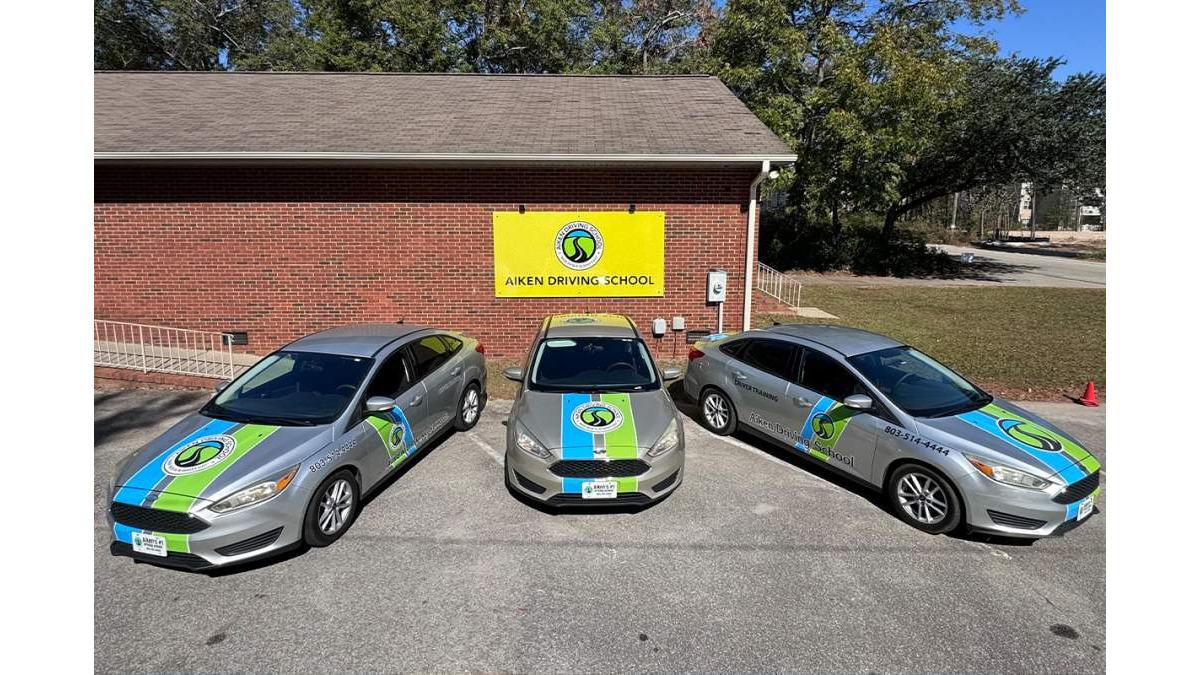
Aiken Driving School is an SCDMV-approved third-party testing school, so students can complete their South Carolina road test with us rather than waiting at a DMV office, removing one of the biggest sources of stress in the process.
Our Driving School Service Area and Coverage
Our driving school service area covers Aiken County, with pick up and drop off available from homes, schools, and workplaces across the county. Families do not need to drive their student to a meeting point first. We come to them.
Coverage matters because a pickup service is only useful if it reaches your address. When checking any provider's coverage area, ask two questions: does the boundary include your street, and does a lesson ever start outside it for an extra charge?
How to Verify a Coverage Boundary Before You Book
A coverage map is a starting point, not a guarantee. Run the address through these checks before lesson day:
- Drop the exact street address into the provider's booking tool. A ZIP code search can return a yes while the actual street sits outside the route. Use the full address, not the town name.
- Ask whether the boundary is a radius or a list of approved zones. A radius drawn around one office can clip the far side of a county; a zone list is usually more honest about where instructors actually drive.
- Confirm the pickup window, not just the pickup point. A provider that covers your address at 4 p.m. may not cover it at 7 a.m. Ask which days and time blocks are served.
- Ask what happens at the edge. If your home sits a few streets outside the line, some schools will still come for a small travel adjustment, and some will not. Find out which before you register.
- Get the boundary in writing. An email confirmation of your pickup address and time block is the version that counts if a schedule dispute comes up later.
What County-Wide Coverage Actually Changes
The practical benefit of county-wide coverage is that lessons fit around real life. A student can be picked up from home on a Tuesday, from school on a Thursday, and from a part-time job on a Saturday.
That flexibility also solves what fixed-route transportation cannot: a school bus runs one path at one time, while a pickup lesson can start wherever the student already is, so no family has to build an afternoon around delivering a teenager across town and waiting.
Coverage Questions Worth Asking Any Provider
- Which days and time blocks are served at my address?
- Is the boundary a radius or a defined zone list?
- Is there any travel adjustment for an address near the edge?
A provider that answers all five without hesitation is one that has thought about logistics, not just marketing.
Driving Lesson Locations: Home, School, or Work
Driving lesson locations are flexible with a pickup service, and that flexibility is the point.
Each option has a trade-off worth knowing:
| Pickup Location | Best For | Watch Out For |
|---|---|---|
| Home | First lessons, anxious students | Driveway practice can get repetitive |
| School | Afternoon slots, busy parents | Campus traffic at dismissal |
| Work | Adult learners, tight schedules | Parking lot rules vary by employer |
| Other agreed address | Doctor visits, activities | Confirm the address is inside the coverage area |
For nervous beginners, starting at home is usually right, familiar surroundings lower the temperature on the first lesson. Once a student is comfortable, shifting the pickup point to school or work adds variety and new traffic patterns.
Adults returning to driving after a long break often prefer pickup at work, since it fits a lunch hour or the end of a shift.
How to Book Driving Lessons With Pickup
Booking driving lessons with pickup takes four steps at Aiken Driving School: register online, choose a session type, request your pickup address, and confirm the schedule.
Here is the process in order:
- Register through the online portal and set up the student's profile
- Select the program that fits, whether that is teen driver education, adult behind-the-wheel training, or additional lessons for a student who needs more time
- Enter the pickup address and any scheduling windows that work for your family
- Confirm the appointment and note the cancellation policy
- Add the road test when the student is ready, since we handle testing on site
Most families finish registration in one sitting. The harder part is finding a weekly slot that survives sports season, which is why we ask about availability up front rather than assigning a fixed time.
When Plans Change: Contingency and Scheduling
Plans change, and a pickup service has to absorb that without derailing a student's progress. Weather, illness, a shifted practice schedule, or a last-minute appointment can all collide with a lesson.
Most providers publish a cancellation window and stop there. The details that matter are the ones nobody posts: who may hand the student off, what happens if the instructor is late, and how a missed ride gets made up.
The Contingency Questions to Settle Up Front
- Cancellation window. How much notice is required to move a lesson without losing the slot? A common pattern is 24 hours, but confirm the exact rule in writing.
- Late pickup. If the instructor is running behind, who contacts whom, and how far behind is normal before you should call?
- Late student. If your student is not ready when the instructor arrives, how long will the instructor wait, and does that time come out of the lesson?
Authorized Handoffs and Student Release
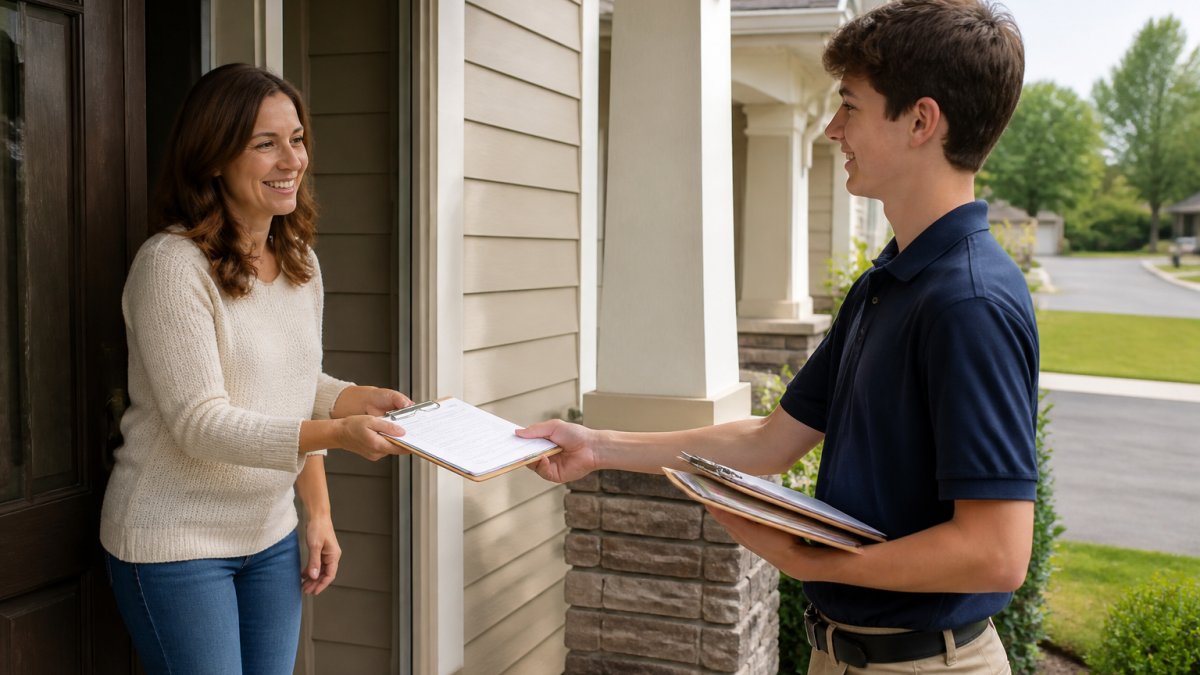
A pickup lesson begins with a handoff, where most confusion lives. If a grandparent, babysitter, or older sibling is home at pickup time, the instructor needs to know in advance.
The same logic applies at drop-off. If the student is being returned somewhere other than the pickup address, a friend's house, a practice field, a workplace, that change should be confirmed before the lesson starts, not relayed through the student mid-drive.
Keeping Momentum When a Week Slips
Consistency moves a student toward their license. One missed week is not a crisis, but three in a row will show up behind the wheel. A few habits keep things on track:
- Give as much notice as possible when you need to move a lesson
- Keep a backup pickup address on file in case the usual one is unavailable
- Confirm the next appointment at the end of each lesson while everyone is together
Treat the lesson slot like any other standing appointment and the momentum takes care of itself. That consistency is why families stay with us. Emily Drew put it plainly after her son passed on his first attempt: the school "is run like a well oiled machine," the instructors were "prompt, communicative and picked him up from our house," and he walked into the test confident in his strengths and clear on what to watch.
Frequently Asked Questions
Do driving schools pick students up at home?
Many do, including Aiken Driving School, which offers pick up and drop off anywhere in Aiken County. The instructor arrives at your address, the student takes the wheel from there, and the lesson ends back at your door. It removes the need for a parent to sit in a lobby for two hours. Confirm your specific address is inside the coverage map before you register, since rural routes and addresses just outside the county line may need a different arrangement.
Can a driving lesson start at a location other than my house?
Yes. Pickup points can be a school, workplace, or another agreed address as long as it falls inside the provider's service area. Families often schedule the first lesson at home and later switch to a school pickup once the student is comfortable. Tell the school your preferred location when you book so the route can be planned in advance, and confirm the exact meeting spot, such as the front office or a specific parking lot, rather than a general street address.
How do I find out whether my address is in a driving school's pickup area?
Ask directly and get a yes or no for your street, not a general answer about the county. Aiken Driving School covers pick up and drop off throughout Aiken County, so most local addresses qualify. If you live near the county line or on a long unpaved road, mention that when you call. A short phone call or a note in the online registration form settles it before you pay for a package you cannot fully use.
What should I ask a driving school about lesson pickup?
Ask four things: whether your address is covered, how much notice the instructor needs for a schedule change, what happens if the student is not ready when the car arrives, and whether pickup is included or added on. Clear answers to those questions tell you more about a school's reliability than any advertisement, and they prevent surprises once lessons are underway.