 How-to
Is a Teen Driver Education Course Worth It?
Last Updated: November 7, 2026
Quick Summary
A teen driver education course is worth it because it combines classroom instruction with supervised behind-the-wheel training that prepares your teen for a South Carolina learner's permit and license. Look for a course that covers traffic laws, permit preparation, graded driving practice, and road test conditions.
- Classroom time covers traffic laws, road rules, signs, signals, and risk awareness for the written permit test.
- Behind-the-wheel training should progress from quiet residential streets to highways, night, and bad-weather driving.
- Aiken Driving School is an SCDMV-approved third-party tester, so your teen can take the road skills test there.
- Verify the provider's approval number and request a sample completion document before you pay.
- Track mastery of specific skills rather than chasing a raw count of practice hours.
Table of Contents
- What a Teen Driver Education Course Actually Covers
- How to Teach a Teenager to Drive Without the Guesswork
- What Teen Behind-the-Wheel Training Should Include
- How Long Does Driver Education Take?
- Teen Road Test Preparation and SCDMV Testing
- Parent Practice Hours and Supervised Driving
- How to Verify Course Approval and Completion Documents
- Registering Your Teen for Driver Education
- Frequently Asked Questions
What a Teen Driver Education Course Actually Covers
A teen driver education course is a structured program that combines classroom instruction with supervised behind-the-wheel training to prepare a new driver for a South Carolina learner's permit and license. At Aiken Driving School, we build every course around two halves that reinforce each other: what happens in the classroom and what happens in the driver's seat.
A course is not a magic shield. It is a structured head start.
Here is what the two components actually deliver.
Classroom Instruction and Permit Preparation
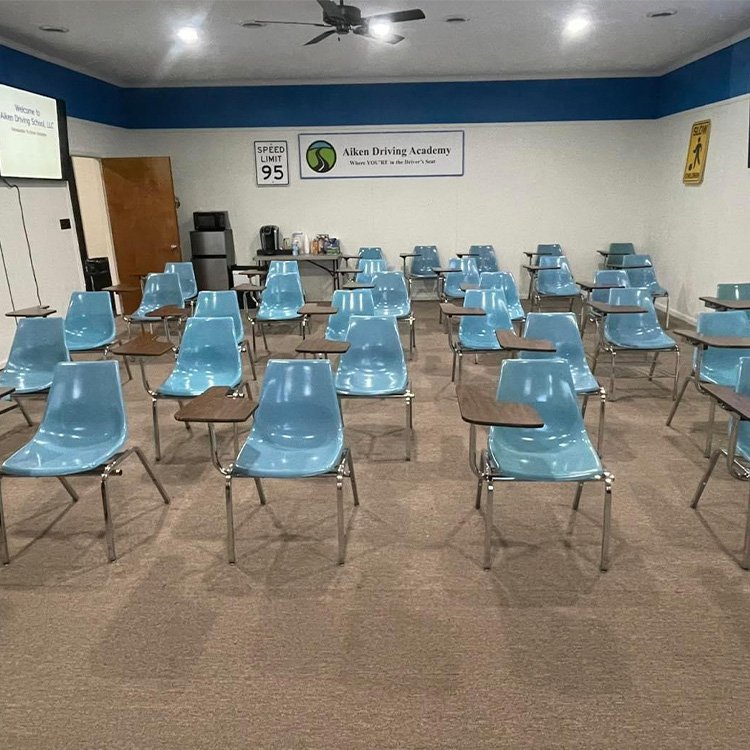
Classroom time covers traffic laws, road rules, signs, signals, and the risk-awareness thinking that keeps new drivers out of trouble.
Your teen should leave able to explain right-of-way rules, following distance, and how alcohol and distraction affect reaction time, not just recite answers.
If your teen needs focused help before the written exam, our permit prep class walks through the exact material the test covers.
Behind-the-Wheel Instruction and Vehicle Operation
Behind-the-wheel instruction puts an instructor in the passenger seat for real vehicle operation. This is where driving skills become habits.
A common mistake is treating the driving hours as a formality to log and forget. They are the part that transfers to the road test.
Ready to start the classroom and driving combination? You can take driver education with our driving school in Aiken and see the full course structure.
How to Teach a Teenager to Drive Without the Guesswork
Learning to teach a teenager to drive is its own skill, and most parents learn it by trial and error in a parking lot.
Here is how we would divide it:
- Instructor's job: teaching the mechanics, correcting bad habits early, and building road test readiness.
- Parent's job: supervised practice hours, calm repetition, and exposure to familiar local roads.
- Shared job: reviewing what went wrong after each session without turning the car into a courtroom.
The single biggest mistake we see is a parent teaching rules they half-remember. South Carolina's driver manual is the authority, not family folklore.
For a deeper coaching framework, read our guide on the best way to teach a teen driver.
What Teen Behind-the-Wheel Training Should Include
Teen behind-the-wheel training should include graded exposure: quiet residential streets first, then arterials, then highway merging, then night and bad-weather driving where your state's rules allow it.
Look for lessons that cover:
- Basic control: starting, stopping, turning, parking.
- Traffic flow: lane changes, intersections, following distance.
- Hazard perception: scanning ahead, reading other drivers, anticipating.
- Road test conditions: the exact maneuvers an examiner will score.
The thing nobody tells you about behind-the-wheel hours is that quality beats quantity. Twenty focused minutes with correction beats an hour of silent cruising.
How Long Does Driver Education Take?
The exact timeline depends on the program format and your family's schedule, so ask any provider for their specific schedule before you enroll.
The driving portion still has to happen in a car, on real roads, with a real instructor.
A realistic expectation: plan for weeks, not days, and build the schedule around your teen's sports and work commitments. Programs with flexible scheduling and pickup service remove the biggest reason families fall behind.
Teen Road Test Preparation and SCDMV Testing
Teen road test preparation should mirror the actual test: the same maneuvers, the same scoring criteria, the same pressure. Practicing the parallel park once and hoping is not preparation.
This is where an approved third-party tester changes the experience. You can schedule your road test once your teen is ready.
Watch out: booking the road test before your teen has consistent practice hours is the most common cause of a failed first attempt. Readiness first, appointment second.
Parent Practice Hours and Supervised Driving
Supervised driving hours are the quiet engine of the whole process. Classroom instruction teaches rules; supervised practice turns them into reflexes. You should confirm current supervised driving requirements for permit holders with the SCDMV before you build a practice plan.
A workable weekly rhythm:
| Day | Focus | Duration | Who Supervises |
|---|---|---|---|
| Monday | Residential streets, turns | 30 minutes | Parent |
| Wednesday | Intersections, lane changes | 30 minutes | Parent |
| Saturday | Highway merging, parking | 45 minutes | Parent or instructor |
| Sunday | Review and repeat weak spots | 30 minutes | Parent |
Duration
Keep a simple log. Note the date, the route, and one thing to improve next time. That log becomes your road test readiness check.
A Skills Checklist That Beats a Mileage Count
Instead of chasing hours, track mastery of specific skills. A teen is ready for the road test when they can consistently perform each of these without prompting:
- Pre-drive routine: seat and mirror adjustment, seatbelt, gear selection, and a walk-around check.
- Basic control: smooth acceleration and braking, lane positioning, and three-point turns.
- Intersections: full stops, right-of-way judgment, and left turns across traffic.
- Lane changes: mirror and blind-spot checks, signal timing, and speed maintenance.
- Parking: parallel park, perpendicular park, and hill parking with the wheels turned correctly.
- Hazard response: scanning ahead, following distance, and reacting to sudden stops.
Mark each skill as introduced, practiced, or mastered. Move to the next skill only when the previous one is mastered in low-traffic conditions, then re-test it in heavier traffic.
A Four-Phase Practice Plan
A phased approach can reduce the panic that comes from jumping straight onto busy roads.
- Phase 1, Empty lots and quiet streets (first 2-3 sessions): focus on starting, stopping, turning, and parking. No traffic pressure.
- Phase 2, Residential and low-speed arterials (next 4-6 sessions): add intersections, lane changes, and following distance. Introduce one new challenge per session.
- Phase 3, Highway and night driving (next 3-4 sessions): merging, speed management, and headlight use. Night driving only after daytime skills are solid.
- Phase 4, Road test conditions (final 2-3 sessions): run the exact maneuvers an examiner will score, in the same order, with no coaching.
Watch out: practicing only on familiar routes builds false confidence. Rotate in at least two unfamiliar areas before the road test so your teen learns to read new roads instead of memorizing a loop.
How to Coach Without Turning the Car Into a Courtroom
A common pattern is that parents correct too late or too often, which teaches a teen to wait for instructions instead of scanning for themselves. Try these rules:
- Give directions early: say "turn left at the next light" at least a block ahead, not at the intersection.
- Correct the action, not the person: "Check your mirror before you change lanes" works better than "You forgot again."
- Debrief after, not during: pull over or wait until you are home to review what went wrong.
- Let silence do work: if the teen is driving safely, say nothing. Constant chatter erodes scanning.
For a deeper coaching framework, read our guide on the best way to teach a teen driver.
How to Verify Course Approval and Completion Documents
Verify course approval by confirming the provider is recognized by the SCDMV, and ask to see what the completion document looks like before you pay. Verification has to happen before enrollment, not after.
What 'Approved' Actually Means
A provider can be approved for different things, and the distinctions matter:
- Classroom instruction approval: the provider is recognized to deliver the classroom portion of driver education.
- Behind-the-wheel approval: the provider is recognized to deliver supervised driving instruction.
- Third-party road skills testing approval: the provider is authorized to administer the actual road test on behalf of the SCDMV. Not every driving school holds this.
Ask which approvals the school holds, not just whether it is "approved." A school approved for classroom instruction may not be approved to test.
How to Confirm Approval Before You Pay
- Ask for the provider's approval or license number and the name of the agency that issued it.
- Cross-check with the SCDMV by calling the local office or checking the agency's published list of approved providers.
- Ask what happens if a completion document is rejected, a reputable school will have a process to reissue or correct it.
- Request a sample completion document (with personal details redacted) so you know exactly what your teen will receive.
Watch out: a provider that cannot produce an approval number or a sample document on request is a red flag. Enrolling first and verifying later is how families end up paying twice.
What a Valid Completion Document Must Contain
A completion certificate that the SCDMV will accept should include:
- The provider's legal name and approval or license number
- Your teen's full legal name as it appears on the permit
- The specific course completed (classroom, behind-the-wheel, or both)
- The completion date
- A signature or seal from the provider
Keep the original in a safe place and make a digital copy. You will likely need it at the permit or license step, and replacements can take time.
Questions Worth Asking Any Provider
- Is your school approved for third-party road skills testing?
- What document does my teen receive at completion, and what does it include?
- What happens if my teen misses a scheduled lesson?
- Do you offer pickup and drop-off in our area?
- Can you show me a sample completion document before I enroll?
If a provider cannot answer these plainly, keep looking. A completion certificate that the SCDMV will not accept is worse than no certificate at all.
Registering Your Teen for Driver Education
Registration should take minutes, not a phone tree.
Before you register, gather:
- Your teen's learner's permit or permit application details
- Your contact information and pickup address
- A rough weekly availability window
Then follow the booking steps in our guide on how to book driving lessons so the first lesson lands on the calendar without back-and-forth.
The difference between a teen who passes on the first attempt and one who cycles through retests usually comes down to structured instruction and consistent practice, not luck.
Frequently Asked Questions
How do I teach my 15-year-old to drive?
Start with a learner permit, then build practice sessions in low-traffic areas before moving to busier roads. Keep sessions short at first, focus on one skill at a time, and stay calm when mistakes happen. A structured teen driver education course handles the classroom and permit test preparation, while parent-supervised practice reinforces what your teen learns. Many families split the work this way: the school teaches technique and road rules, and parents provide the repeated hours of supervised driving that build confidence.
How long does a teen driver education course take?
Timelines vary by program and by how often your teen can attend. Classroom instruction typically runs across several sessions, and behind-the-wheel training is scheduled around your family's availability. Some programs offer self-paced online study, which lets teens move faster or slower depending on their schedule. Ask the school directly about class schedules and how quickly behind-the-wheel slots open up, since that often determines the total timeline more than the classroom portion does.
What is the difference between driver education and behind-the-wheel training?
Driver education is the broader program: classroom instruction on traffic laws, road rules, risk awareness, and safe driving habits, plus permit preparation. Behind-the-wheel training is the in-car portion, where a certified instructor works with your teen on vehicle operation, hazard perception, and real-road driving skills. Both matter. Classroom learning explains why the rules exist, and behind-the-wheel practice builds the muscle memory your teen needs to pass the road test and drive safely afterward.
How can a teen prepare for the driving test?
Practice the specific maneuvers the road test evaluates, drive the routes near the testing location, and log plenty of supervised hours in varied conditions. A mock road test with an instructor helps identify weak spots before test day. Choosing an SCDMV-approved third-party tester can also simplify the process, since your teen can often complete the road skills test with the same school that trained them, avoiding a separate trip to the DMV.