 blog
How to Choose the Best Driving School for Nervous Adults
Last Updated: October 26, 2026
Quick Summary
The best driving school for nervous adults pairs patient instructors with gradual, step-by-step training that builds confidence before traffic, intersections, or freeway driving. Confirm you get the same instructor each lesson and that lessons follow a clear order from vehicle control to road practice to road test.
- Ask instructors how they handle a student who freezes, panics, or cries after a bad turn.
- Match the instructor to your exact fear and ask for evidence, not reassurance.
- Adult lessons should move from vehicle control to quiet roads, traffic, hazards, then freeway.
- Track concrete markers like route comfort and maneuver independence instead of vague confidence.
- Book one lesson, one instructor, one quiet location before committing to a full program.
Table of Contents
- What Makes a Driving School Right for Nervous Adults
- How to Find a Driving Instructor for Nervous Adults
- What Adult Beginner Driving Lessons Should Cover
- Driving Anxiety Tips That Actually Help Before a Lesson
- Adult Road Test Preparation Without the Guesswork
- Red Flags to Watch for When Comparing Schools
- Booking Your First Nervous Driver Lesson
- Frequently Asked Questions
What Makes a Driving School Right for Nervous Adults
Finding the best driving school for nervous adults starts with one question: does the program treat anxiety as a normal starting point or as a problem to push through?
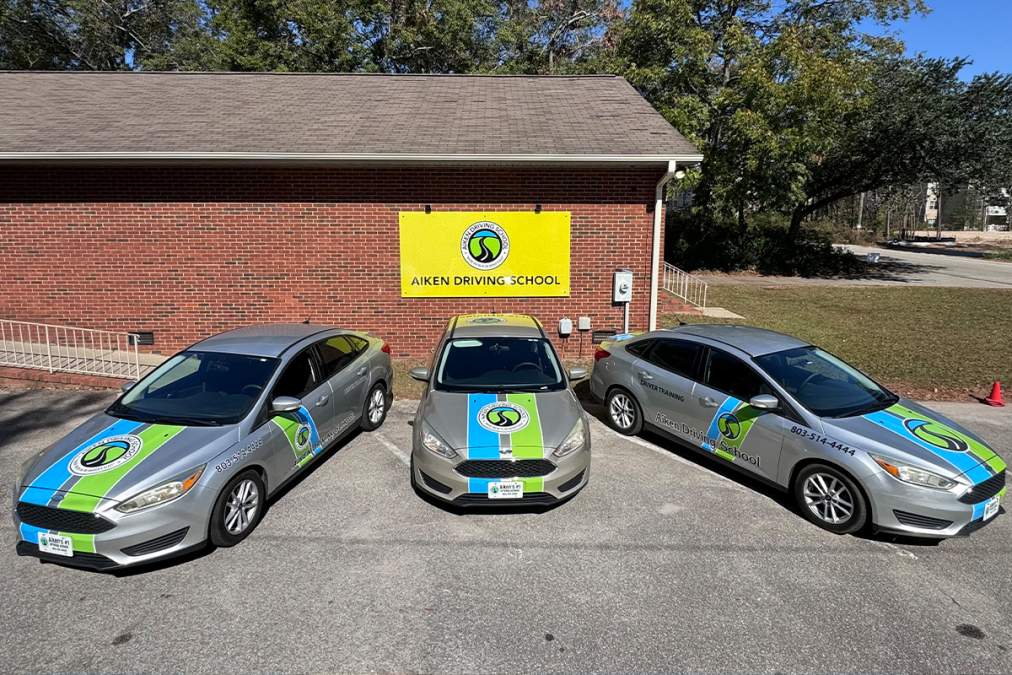
At Aiken Driving School, we have taught in Aiken County since 2011, and the pattern is consistent.
The right school for an anxious beginner has a few visible markers:
- Instructors trained to give calm instruction and stay quiet while you think
- A supportive learning environment where mistakes are expected
- Private lessons rather than a packed car of strangers
- A clear sequence from parking lot to road practice to road test
If you want to see how a dedicated adult program is structured, explore our adult driver ed program.
How to Find a Driving Instructor for Nervous Adults
The instructor matters more than the school's name on the sign. When you look for a driving instructor for nervous adults, ask directly how they handle a student who freezes at a green light, panics on a merge, or cries after a bad turn.
Some schools now market instruction built for anxious drivers, with gradual exposure and patient instructors as the core method.
Match the instructor to your specific fear
"Patient" is not a personality trait you can verify from a website. Match the instructor to the exact situation that frightens you, and ask for evidence:
- Freeway fear: Ask how many lessons they typically spend on merging and lane changes before a student drives a full highway route. A structured answer names a sequence; a vague one says "we'll see how it goes."
- Intersection and left-turn fear: Ask whether they teach a specific gap-judgment method (count the gap, identify the escape lane, commit or wait) rather than "just go when it's clear."
- Parking and maneuver fear: Ask whether they break parallel parking into reference points you can repeat, or whether they expect you to "feel it out."
- Panic or freeze response: Ask what they do in the moment, pull over, breathe, reset, resume, and whether they have a script for it.
Ask about instructor matching and consistency
A school that assigns a different instructor each lesson forces you to re-explain your fears every time. Before booking, confirm:
- Will I get the same instructor for every lesson, and can I request a specific one?
- If the match isn't working, can I switch without losing prepaid lessons?
- Is the instructor trained in adult learners specifically, or mostly teen driver education?
- What is the instructor's typical availability for evenings and weekends?
Ask about accessibility and accommodations
Anxiety often travels with other needs. Ask whether the school can accommodate:
- Language: Instruction in a language you process most comfortably under stress.
- Vehicle adaptations: Hand controls, spinner knobs, seat and mirror adjustments, or a larger vehicle for taller or shorter learners.
- Physical and sensory needs: Extra time to enter and exit, quieter lesson routes, or breaks scheduled into the lesson.
- Panic and learning needs: A written lesson plan you can review in advance, or permission to record a debrief so you can revisit it calmly.
Set the boundary on anxiety support
Gradual exposure, starting in a low-stakes environment and adding one challenge at a time, is the practical mechanism most instructors use, and it is not the same as therapy. Driving instruction is not a substitute for mental-health care. If anxiety is severe, includes panic attacks outside the car, or interferes with daily life, talk with a licensed mental-health professional alongside your lessons.
One common mistake is choosing on price alone. The cheapest lesson is expensive if it scares you off the road for a year.
Match the instructor to the exact fear, and ask for evidence rather than reassurance.
| Fear | What to ask the instructor |
|---|---|
| Freeway fear | How many lessons on merging and lane changes before a full highway route |
| Intersection and left-turn fear | Whether they teach a specific gap-judgment method |
| Parking and maneuver fear | Whether parallel parking is broken into repeatable reference points |
| Panic or freeze response | What they do in the moment: pull over, breathe, reset, resume |
What Adult Beginner Driving Lessons Should Cover
Adult beginner driving lessons should move in a deliberate order: vehicle control first, then quiet-road practice, then traffic awareness, then hazard perception, then freeway driving. Skipping ahead is the fastest way to rattle a nervous driver.
A solid adult program covers:
- Vehicle control: mirrors, signals, steering, braking smoothly, parking
- Road practice: residential streets, stop signs, right-of-way
- Intersection awareness: left turns across traffic, four-way stops, lights
- Hazard response: scanning, following distance, reading other drivers
- Freeway and highway lessons: merging, lane changes, exit planning
If you are starting from zero as an adult, the licensing path matters too. Our guide on how to get a driver's license as an adult walks through the steps so you know what each lesson is preparing you for.
Driving Anxiety Tips That Actually Help Before a Lesson
Driving anxiety tips work best when they lower the stakes before you ever turn the key. Anxiety behind the wheel is a learned response, and it responds to repetition, preparation, and predictability.
Try these before your next lesson:
- Drive the route in your head. Picture the parking lot, the first turn, the stop.
- Arrive early and sit in the driver's seat with the engine off. Get used to the position.
- Name three things you can control. Your speed, your following distance, your breathing.
- Tell your instructor what scares you. A patient instructor will build the lesson around it.
- Skip caffeine right before. Jitters stack.
Watch out: don't spend the night before watching crash videos or reading road-rage threads. You are priming your brain with exactly the wrong footage.
Adult Road Test Preparation Without the Guesswork
Adult road test preparation should mirror the actual test, not a generic driving lesson. The road test measures whether you make safe driving decisions under observation, so practice should include someone watching quietly while you drive a normal route.
We are approved by the South Carolina Department of Public Safety to offer third-party road skills tests, which means you can schedule your road test with us instead of waiting in line at a DMV office.
Measure progress, not just lessons
Most nervous adults cannot tell whether they are improving, which makes it easy to feel stuck. Track concrete markers instead of a vague sense of confidence:
- Route comfort: Can you drive a specific route, your neighborhood loop, the road to work, a particular intersection, without a spike in heart rate?
- Maneuver independence: Can you complete a three-point turn or a parallel park with no verbal prompts from the instructor?
- Quiet-car test: Can you drive a normal route for ten minutes with the instructor silent except for directions?
- Recovery: When you make a mistake, can you correct it and continue without needing to pull over?
When those markers hold for two consecutive lessons, you are likely ready for a mock test.
Evaluate the school's test-day support before you book
Ask these questions before you commit to a road-test package:
- Does the school provide the test vehicle, and is it the same vehicle you practiced in?
- Is a warm-up lesson included on test day, or is that a separate booking?
- What happens if you fail, is a retest lesson included, and how is it scheduled?
- Does the school handle the third-party testing paperwork, or do you file it yourself?
- What is the cancellation and rescheduling policy if anxiety gets the better of you on test morning?
Avoid pressure tactics
A school that pushes you to test before you feel ready is optimizing for its schedule, not your safety. Signs of a supportive test-prep program:
- The instructor tells you plainly when you are not ready and explains why.
- You are offered a mock test with written feedback before the real one.
- No one suggests testing "to see what happens" as a confidence-building exercise.
Preparation that works:
- Practice the exact maneuvers tested: parking, three-point turns, lane changes, stops
- Drive with silence in the car so observation feels normal
- Review the common fail points: rolling stops, missed mirrors, hesitation at intersections
- Do one full mock test before the real one
The goal is not a perfect drive. It is a calm, legal, predictable one.
Red Flags to Watch for When Comparing Schools
Comparing driving schools comes down to spotting pressure before it costs you. A school that rushes an anxious adult into traffic on lesson one is telling you something.
Watch for these:
- Instructors who raise their voice or sigh at mistakes
- No clear lesson plan or progression
- Pressure to prepay for a large package before you have met the instructor
- No answer on who teaches the lessons
- Vague answers about testing approval or licensing steps
Ask for straight answers in writing. Our frequently asked questions page covers the common ones about licensing and driver ed, and it is a fair test of how clearly a school communicates.
Booking Your First Nervous Driver Lesson
Booking the first lesson is the hardest step for most anxious adults, so make it small. Pick one lesson, one instructor, one quiet location. You are not committing to a full program yet.
Aiken Driving School offers online registration and scheduling, plus pickup and drop-off anywhere in Aiken County, so your first lesson can start at your own front door. Our step-by-step booking guide shows exactly how to reserve a time.
Here is how we would do it:
- Register online and note your availability, including evenings and weekends
- Request a patient instructor and say plainly that you are anxious
- Start with a single lesson in a low-traffic area
- Debrief afterward: what felt okay, what didn't
- Book the next lesson only when you are ready
Nervous adult drivers do not need to be pushed. They need a plan, a calm voice in the passenger seat, and a school that measures progress in confidence, not speed.
Frequently Asked Questions
What is the best driving school for nervous adults?
The best driving school for nervous adults pairs patient instructors with a gradual, step-by-step training plan. Look for schools that offer private adult behind-the-wheel lessons, allow you to request a specific instructor, and explain each lesson before you start. A school approved for third-party road testing, like Aiken Driving School, also removes the stress of a separate DMV visit. Ask how instructors handle anxiety and whether you can switch instructors if the fit feels wrong.
How many adult beginner driving lessons does a nervous driver usually need?
There is no fixed number, and any school quoting one before meeting you is guessing. Nervous adult beginners often start with short sessions in low-traffic areas and add length and complexity as confidence grows. A practical approach is to book one lesson, review how you felt, then schedule the next. Ask the school to outline milestones, such as parking lot basics, residential roads, intersections, and highway merges, so you can see progress instead of counting lessons.
Can I practice driving with an instructor before taking a road test?
Yes. Adult road test preparation should include practice on the same skills the test measures: lane changes, intersections, parking, and hazard response. Ask whether the school offers a mock road test and whether your instructor will ride along on test day. At Aiken Driving School, SCDMV-approved third-party testing means eligible students can complete the road skills test with the school rather than waiting in line at a DMV office.
What should I tell a driving instructor if I feel nervous?
Say it at the start of the first lesson. Tell the instructor what specifically worries you, such as highway merges, left turns at busy intersections, or parallel parking, and ask them to explain each step before you attempt it. Good instructors welcome this and adjust pace accordingly. You can also ask to begin in an empty parking lot and stay on quiet residential streets until you feel steady. Clear communication is one of the most effective driving anxiety tips.