 ultimate-guide
Benefits of Professional Driving Instruction: 2026 Guide
Last Updated: October 23, 2026
Quick Summary
Professional driving instruction is structured, supervised coaching from a qualified instructor who builds skills in a deliberate sequence and corrects problems before they become habits. Research shows lessons reliably make people better drivers, though the crash-reduction effect is modest, which is why practice between lessons matters. The strongest results come from combining professional instruction with parent-supervised practice.
- A 2021 systematic review found driver training improved driving performance and self-perceived ability.
- Pair professional lessons with parent-supervised practice for both structure and volume.
- Verify the school holds required state or third-party testing credentials before committing.
- Instructors track progress against a skill checklist rather than a feeling.
- No instructor can guarantee a first-attempt pass on the road test.
Table of Contents
- Why Professional Driving Instruction Matters More Than Ever
- Driving Lessons vs. Learning From Parents: An Honest Comparison
- Professional Driving Lessons for Beginners: What Actually Happens
- Building Skills That Last: Vehicle Control, Hazard Recognition, and Defensive Driving
- How Many Driving Lessons Do I Need?
- Road Test Preparation and Test Readiness
- Choosing an Instructor, Understanding Costs, and Knowing the Limits
- Frequently Asked Questions
Why Professional Driving Instruction Matters More Than Ever
The U.S. driving school industry generated an estimated $2.0 billion in 2026, according to IBISWorld's driving schools industry analysis. That spending reflects a simple reality: getting a license is easy, but learning to drive well is not. Professional driving instruction is structured, supervised coaching from a qualified instructor who builds skills in a deliberate sequence and corrects problems before they become habits. At Aiken Driving School, we have taught behind-the-wheel skills since 2011, and we have watched the difference structured coaching makes for new drivers and nervous adults alike.
What the Research Actually Shows
The evidence is real but honest. A 2021 systematic review published in the journal Injury Prevention found that pre- and post-license driver training improved driving performance and self-perceived driving ability, and may also produce a small improvement in safety outcomes (driver education safety review). A 2023 article in the Journal of Road Safety argued that adept, higher-order professional instruction can improve young drivers' safety behavior in ways that may reduce crashes. Translation: lessons reliably make people better drivers. The crash-reduction effect is modest, which is exactly why practice between lessons matters.
Driving Lessons vs. Learning From Parents: An Honest Comparison
Parent-taught driving is not the enemy. It offers lower cost, flexible scheduling, a familiar learning environment, and more total practice time. Where it struggles is objectivity and structure: parents pass on their own habits, good and bad, and few have a lesson plan. The strongest results come from combining both, professional instruction for structure and correction, parent-supervised practice for volume.
| Factor | Parent Teaching | Qualified Instructor |
|---|---|---|
| Cost | Lower upfront | Varies by package |
| Scheduling | Fully flexible | Set by school |
| Objectivity | Passes on family habits | Corrects habits early |
| Structure | Informal | Progressive lesson plan |
| Test preparation | General | Road test focused |
| Feedback | Familiar but subjective | Documented and skill-specific |
| Insurance impact | No formal credential | May qualify for discounts |
Where Parent Teaching Wins
Supervised practice hours with a parent are free, plentiful, and calm. A teenager who has already logged time in a family car arrives at formal lessons ready to learn rather than just steer. Parents also know their child's temperament and can tailor encouragement in ways a stranger cannot.
Where a Qualified Instructor Wins
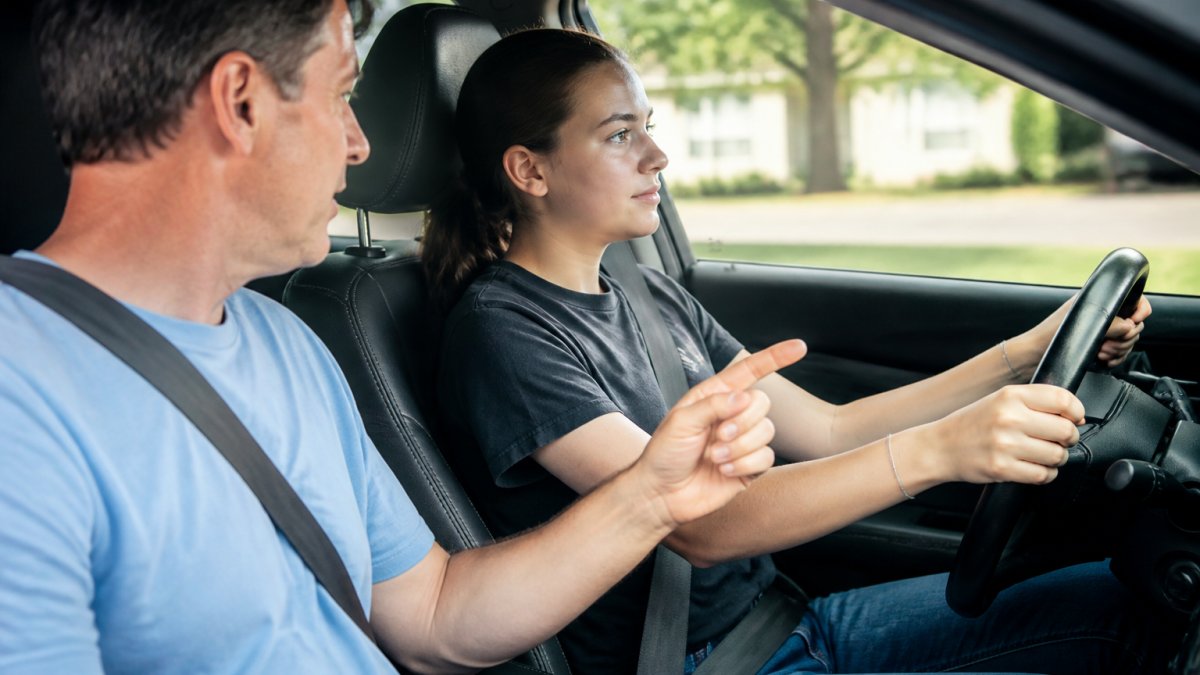
A qualified instructor brings a structured curriculum, one-on-one instruction, immediate corrective feedback, and a neutral perspective on bad driving habits forming in real time. For anxious or stubborn learners, that outside voice often lands where a parent's does not. Instructors also document progress against specific competencies, which gives parents a clear practice agenda between lessons.
How to Evaluate an Instructor or Driving School
Not all professional instruction is equal. Use these checks before committing:
- Licensing and approvals. Verify the school holds the required state or third-party testing credentials. Approved schools can administer the road skills test, which shortens the licensing timeline.
- Teaching approach. Ask whether lessons follow a progressive plan, how feedback is delivered, and whether progress is documented after each session.
- Vehicle safety. Confirm dual-control vehicles, current inspection records, and insurance coverage.
- Reviews and references. Look for patterns in reviews about patience, punctuality, and communication, not just star averages.
- Lesson structure. Ask what a typical first, fifth, and tenth lesson covers so you can see the arc of skill development.
- Accessibility. If the learner has anxiety, language needs, or a disability, ask how the school adapts instruction.
The Combination That Works Best
Most practitioners find the best outcomes come from pairing professional lessons with parent-supervised practice. The instructor sets the skill target and corrects errors; the parent provides repetition between sessions. That division of labor gives learners both structure and volume, the two ingredients that predict test readiness and long-term safety.
Professional Driving Lessons for Beginners: What Actually Happens
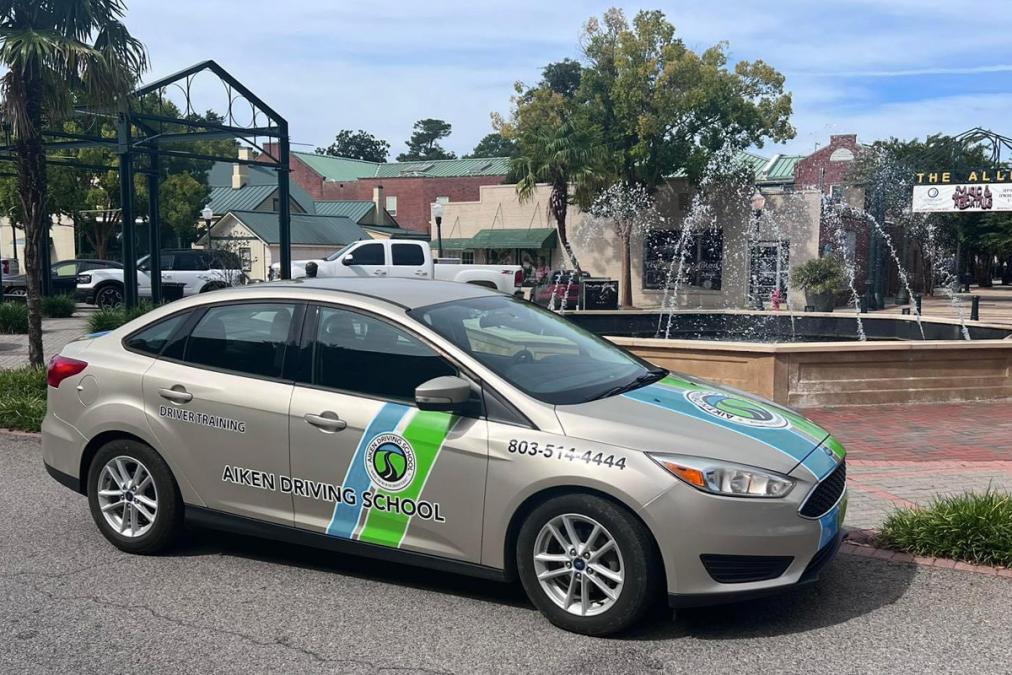
A first professional driving lesson is a diagnostic, not a test. The instructor typically starts with vehicle control basics, then moves to quiet residential streets to assess steering, braking, and awareness before introducing traffic.
How Progress Gets Measured
Progress is tracked against specific competencies, not vibes. Instructors watch for smooth braking, correct mirror checks, consistent lane position, and hazard recognition at increasing speeds and traffic density. At Aiken Driving School, our instructors give feedback after each session so parents know exactly which skills need practice at home.
Building Skills That Last: Vehicle Control, Hazard Recognition, and Defensive Driving
Durable driving skill rests on three pillars: vehicle control (steering, braking, space management), hazard recognition (spotting risk early), and defensive driving (assuming other drivers will make mistakes). Professional instruction teaches these as habits rather than reactions. That matters beyond the road test: safe driving habits feed into collision prevention, and in many cases clean records support insurance discounts.
How Many Driving Lessons Do I Need?
There is no universal number, and any school quoting one is guessing. Lesson count depends on prior practice, anxiety levels, and how quickly skills consolidate. A reasonable approach is to book an initial block, review the instructor's progress notes, then add lessons until the student can handle unfamiliar routes, highway merges, and parking without prompting. Most beginners benefit from several sessions spread over weeks, with parent-supervised practice in between.
What Happens During a Lesson and How Progress Is Measured
A typical lesson sequence moves from low-risk to high-risk environments:
- Pre-drive check. Seat, mirrors, controls, and a walk-around inspection.
- Vehicle control. Smooth braking, acceleration, and steering in a quiet lot or residential street.
- Traffic integration. Lane position, mirror checks, signaling, and following distance at moderate speeds.
- Hazard recognition. Scanning intersections, anticipating other drivers' mistakes, and adjusting speed early.
- Complex maneuvers. Highway merges, lane changes, parking, and unfamiliar routes.
- Test simulation. A mock road test under observation, followed by targeted feedback.
Instructors track progress against a skill checklist rather than a feeling. Common readiness milestones include:
- Consistent mirror and blind-spot checks without reminders
- Smooth braking and acceleration in traffic
- Correct lane position and following distance at highway speeds
- Independent hazard identification and speed adjustment
- Calm handling of unexpected events (sudden stops, merging traffic)
- Parking and three-point turns completed without prompting
How to Know You're Test-Ready
Test readiness means the student can manage traffic conditions, follow road rules without reminders, and stay calm when something unexpected happens. A good instructor will tell you when you're ready, and will also tell you when you're not. If a school promises a first-attempt pass before the first lesson, treat that as a warning sign rather than a guarantee.
Costs and Return on Investment
Lesson fees vary by school and package. Rather than comparing headline prices, ask for a written quote that lists what each package includes, behind-the-wheel hours, pick-up and drop-off, road test administration, and any retest fees. The return on investment comes from fewer retests, fewer tickets, and safer habits that may support insurance discounts over time. Ask your insurer whether completing a state-approved course qualifies for a discount; requirements vary by carrier and jurisdiction.
Road Test Preparation and Test Readiness
Road test preparation is not memorizing a route; it is demonstrating consistent, independent driving under observation. Test readiness means the student can manage traffic conditions, follow road rules without reminders, and stay calm when something unexpected happens. As an SCDMV-approved third-party tester, Aiken Driving School can administer the road skills test itself, which removes the DMV line and lets students test in the car they trained in through our road test service.
Choosing an Instructor, Understanding Costs, and Knowing the Limits
Choosing well comes down to four checks: verify the school's licensing or third-party testing approval, ask how progress is documented, confirm pick-up and drop-off logistics, and meet the instructor before committing. Costs vary by package, so ask for a written quote rather than comparing headline prices. Be clear-eyed about limits, too: lessons work best paired with supervised practice, and no instructor can guarantee a first-attempt pass. A good school will tell you that upfront.
Learning to drive is one of the few skills where the stakes are genuinely high, and the gap between "passed the test" and "drives safely for decades" is closed by structured instruction and honest feedback. Aiken Driving School has served Aiken County since 2011, was voted Aiken's Best Driving School 8 times, and pairs encouraging instructors with convenient pick-up and drop-off across the county. Our teen driver education and adult behind-the-wheel programs are built around each student's pace. Register online and let us help your new driver build skills that last.
Frequently Asked Questions
Is professional driving instruction worth the money?
For most new drivers, yes. A 2021 review in Injury Prevention found that pre- and post-license driver training improved driving performance and self-perceived ability, with a small possible safety benefit. Structured instruction also builds habits that carry into the road test and everyday driving. Pricing varies by program and lesson package, so check with Aiken Driving School directly for current rates rather than assuming a figure.
Are professional driving lessons better than learning from a parent?
They solve different problems. Parent-taught driving offers lower cost, flexible scheduling, and more practice hours in a familiar car. Professional instruction adds a qualified instructor, corrective feedback, and a structured lesson plan that targets hazard recognition and road rules. Many families combine both: professional lessons for the framework, parent practice for repetition between sessions.
How many driving lessons does a beginner need?
There is no universal number. It depends on prior practice, comfort level, and how quickly a student absorbs vehicle control and traffic laws. A student with 20 hours of supervised practice usually needs fewer lessons than one starting from zero. Your instructor should map progress against specific skills, not a fixed count, and adjust the plan as readiness improves.
Can professional driving instruction help you pass the road test?
It targets exactly what the test measures: lane positioning, visibility management, signaling, speed control, and hazard awareness. Road test preparation with an instructor means practicing the maneuvers and traffic conditions examiners score, plus corrective feedback on bad habits before test day. Aiken Driving School is an SCDMV-approved third-party tester, so students can test with the school rather than waiting in line.
What should you look for in a driving instructor?
Look for state approval, a calm teaching style, and a clear lesson plan. Ask whether instruction is one-on-one, how progress is tracked, and whether the school offers pick-up and drop-off. A 2023 Journal of Road Safety article argues that adept, higher-order professional instruction can improve young drivers' safety behavior, so instructor quality matters as much as the curriculum.
Can adults take professional driving lessons?
Yes. Adults come to lessons for many reasons: never having learned, moving from another country, refreshing skills after years away, or working through driving anxiety. One-on-one instruction lets an adult set the pace without the pressure of a group class. Schools that serve both teens and adults, like Aiken Driving School, can tailor the lesson plan to the adult's specific gaps.