 How-to
How to Pass the SCDMV Road Test: A Step-by-Step Guide
Last Updated: November 12, 2026
Quick Summary
To pass the scdmv road test, know exactly what the examiner checks: a vehicle check, a set route, and maneuvers including lane changes, turns, backing, and observation. Practice those skills in test order, bring original documents, and book your appointment ahead of time.
- Run a full vehicle check before every practice drive: headlights, brake lights, signals, wipers, and mirrors.
- Practice turns, lane changes, backing, and parking until each feels routine.
- Bring original documents, since photos or copies can get your appointment rescheduled.
- Road tests require an appointment, so schedule ahead of time.
- After a fail, sort score sheet errors into repeat and one-off mistakes and target the repeats.
Table of Contents
- What to Expect on the South Carolina Road Test
- Eligibility, Permit Requirements, and Documents to Bring
- Pre-Test Vehicle Check: Lights, Signals, Wipers, and Mirrors
- South Carolina Road Test Maneuvers You Need to Master
- SC Driving Test Practice: A Practice Plan Before Test Day
- Scheduling Your SCDMV Driving Test Appointment and Arriving Prepared
- Understanding Your SCDMV Road Test Score Sheet and Next Steps After a Fail
- Frequently Asked Questions
What to Expect on the South Carolina Road Test
Passing the SCDMV road test starts with knowing what the examiner will actually watch for. The test checks your basic vehicle controls, your observation skills, and how well you follow traffic rules on real roads. Nerves cause many avoidable mistakes, so knowing the layout ahead of time helps a lot.
Here's the simple version: you'll do a vehicle check, drive a set route with the examiner, and complete a few maneuvers along the way. The South Carolina DMV's regular-license testing page lists the vehicle checks and driving tasks that appear on the test, including headlights, windshield wipers, turn signals, brake lights, and lane changes. SCDMV regular license road test instructions
At Aiken Driving School, we tell every student the same thing first. Practice the test you'll actually take, not a generic driving session. Drive the skills in the order they'll show up, and say what you're checking out loud.
- Vehicle check before you start the car
- Smooth starts, stops, and speed control
- Turns, lane changes, and signaling
- Observation at intersections and around parked cars
Eligibility, Permit Requirements, and Documents to Bring
Before you can take the road test, you need to meet the state's eligibility rules. Check those first, because a missing document can cost you a full appointment.
The state's official licensing page lays out the current requirements and the resources available to new drivers. South Carolina driver licensing rules and resources
A quick checklist to bring:
- Valid learner's permit
- Proof of identity and residency as listed on the DMV website
- Vehicle registration and proof of insurance
- Any required parental or guardian paperwork for minors
Watch out: Bring original documents, not photos or copies. A missing original is the most common reason an appointment gets rescheduled.
Pre-Test Vehicle Check: Lights, Signals, Wipers, and Mirrors
Before the examiner gets in, you'll be asked to show that the car works. Walk around it and test each light and control so nothing surprises you.
Turn on the headlights and check that both work. Then test the brake lights by having someone stand behind the car while you press the pedal. Turn on the left and right signals and the four-way flashers. Run the windshield wipers and washer fluid. Finally, set your mirrors so you can see the lanes beside you without leaning.
Doing this check every time you practice, not just on test day, makes it automatic, and that calm routine helps you think clearly once the test starts.
South Carolina Road Test Maneuvers You Need to Master
The examiner will ask you to perform several maneuvers. Practice each one until it feels routine, because the test rewards smooth, controlled driving more than speed.
Common maneuvers include:
- Lane changes with a full signal and a clear mirror and blind-spot check
- Turning at intersections with proper right-of-way
- Backing up in a straight line or around a corner
- Parking, including parallel parking if your route requires it
An examiner notices hesitation as much as errors. If you're unsure, slow down and look again rather than guessing.
SC Driving Test Practice: A Practice Plan Before Test Day
A practice plan only works if you can measure it. Random drives build hours, not skills. This plan turns each session into a pass-or-repeat check so you know when a skill is actually test-ready.
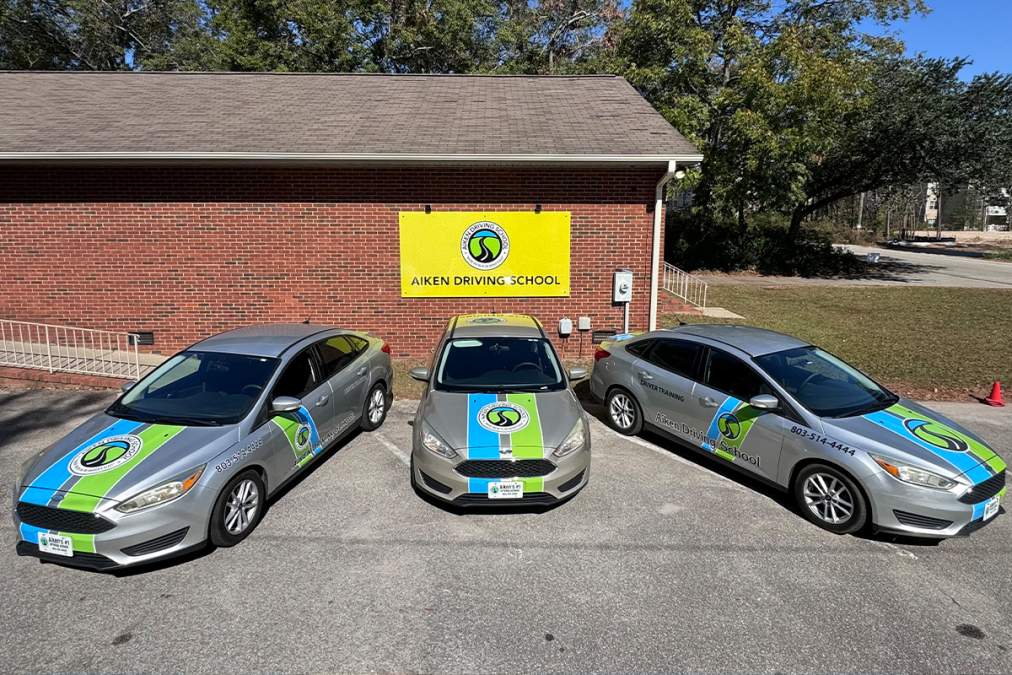
Set up every session the same way. Before you drive, run the full vehicle check: headlights, brake lights, both turn signals, four-way flashers, windshield wipers and washer fluid, and mirror adjustment. Do it every time, not just on test day, so the routine is automatic when the examiner is watching.
Use a simple readiness rule. A skill is test-ready when you can perform it three times in a row without a prompt from your practice partner and without a safety error. If you miss one, reset and start the count over. This is the same repetition logic examiners reward: smooth, consistent execution rather than one lucky attempt.
Week one: vehicle control and observation habits.
- Starts, stops, and speed control on quiet roads, holding a steady speed within a few miles per hour of the posted limit
- Full stop at every stop sign, with a visible head check both ways before proceeding
- Mirror and blind-spot checks practiced out loud until they become automatic
- Readiness check: three clean stop-and-go sequences in a row with no rolling stops
Week two: turns, lane changes, and signaling.
- Signal before every turn and lane change, then mirror, then blind-spot check, then move
- Right turns kept tight without touching the curb; left turns into the correct lane
- Lane changes in light traffic with a full signal and a visible head check
- Readiness check: three consecutive lane changes with no missed signal or blind-spot check
Week three: intersections, right-of-way, and backing.
- Approach every intersection with a scan of signs, signals, cross traffic, and pedestrians
- Practice yielding decisions at four-way stops and uncontrolled intersections
- Straight-line backing and backing around a corner using mirrors and a shoulder check
- Readiness check: three clean backing maneuvers and three correct right-of-way decisions in a row
Final days: full test-condition runs.
- Run the entire sequence in order: vehicle check, drive, maneuvers, return and park
- Practice with a quiet passenger who watches for the same errors an examiner would
- Review your weakest maneuver once, then stop; last-minute cramming tends to add nerves, not skill
Watch out: Practicing only the skills you are already good at feels productive but hides the errors that will cost you points. Spend most of each session on the one or two skills where you still miss the readiness check.
If you want a structured path with guided practice before test day, our permit prep classes and additional driving lessons can help you build these skills.
Scheduling Your SCDMV Driving Test Appointment and Arriving Prepared
Road tests require an appointment. Road tests require an appointment, so schedule ahead of time. SCDMV road test scheduling guidance
Plan to arrive early with your documents and a car that passes the pre-test check.
Our road test service is designed to help students prepare for the road test.
Understanding Your SCDMV Road Test Score Sheet and Next Steps After a Fail
The score sheet is the most useful document you will get all day, whether you pass or fail. It is the examiner's written record of how you drove, and it tells you exactly where points were deducted. Most guides gloss over it, so here is how to actually read it and use it.
How scoring generally works. The examiner observes your drive against a checklist of skills and records errors as they happen. Errors are typically grouped by category: observation and mirror use, speed control, steering and lane position, turns, lane changes, backing, parking, intersection and right-of-way decisions, and vehicle control. A single mistake usually does not fail you; a pattern of the same mistake, or one serious safety error, does. The exact point values and passing threshold are set by the SCDMV, so confirm the current scoring details on the official road test page before your appointment. SCDMV regular license road test instructions
Errors that commonly end a test early. These are the mistakes examiners treat as unsafe rather than merely imperfect:
- The examiner has to take control of the steering wheel or brake to prevent a collision or curb strike
- Rolling through a stop sign or red light, or failing to yield the right-of-way when another vehicle, cyclist, or pedestrian has it
- Driving over the curb or mounting the sidewalk during a turn or parking maneuver
- Backing without looking, or backing into a curb, cone, or vehicle
- Changing lanes without a signal and a mirror and blind-spot check
- Speeding in a school zone or exceeding the posted limit by a wide margin
- Ignoring a traffic signal or sign the examiner specifically points out
A common pattern is that nervous drivers lose points on observation, not on car control. They signal but do not check the mirror. They check the mirror but not the blind spot. They look but do not turn their head enough for the examiner to see it.
How to read your score sheet after a fail. Do not just look at the total. Sort the deductions into two buckets: repeat errors and one-off errors. Repeat errors are your practice priority, because they are the ones that will fail you again. One-off errors are usually nerves and tend to disappear with a full practice run under test conditions.
Retake timing and preparation. The SCDMV sets the rules for when you can retest and whether a waiting period or additional fee applies, so check the official licensing page for the current retake policy before you rebook. South Carolina driver licensing rules and resources A practical approach most instructors recommend:
- Practice targeting the exact errors on your score sheet.
- Re-run the vehicle check until it is automatic.
- Book the retake after a practice run with no repeat errors in your weak category.
Watch out: Rebooking immediately without fixing the errors that caused the failure usually produces the same score sheet. Treat the retake as a scheduled exam you study for, not a second chance at the same drive.
If you want structured help before a retake, our adult road test preparation and testing service can help you prepare.
The score sheet shows where points were lost, and the errors that most often end a test early are listed below.
| Error | Why it matters | What to do |
|---|---|---|
| Examiner takes control of wheel or brake | Treated as a collision risk | Practice steering and braking under calm control |
| Rolling a stop sign or red light | Right-of-way violation | Full stop and yield every time |
| Curb strike or sidewalk mount | Vehicle control error | Slow turns and tight, controlled parking |
| Backing without looking | Safety error | Mirrors plus a shoulder check |
| Lane change without signal or blind-spot check | Observation error | Signal, mirror, blind spot, then move |
| Speeding in a school zone | Serious safety error | Watch posted limits closely |
| Ignoring a sign or signal the examiner points out | Failure to follow traffic rules | Scan signs and signals at every intersection |
Ready to get started? Get started with Aiken Driving School and build the skills you need to pass with confidence.
Frequently Asked Questions
What do you need to know to pass the SCDMV road test?
To pass the SCDMV road test, you need to control the vehicle smoothly, follow traffic signs and signals, check your mirrors and blind spots, and complete the required maneuvers safely. The examiner scores your driving against official criteria, and certain errors cause an automatic fail regardless of the rest of your performance. Practice in a car similar to the test vehicle, know the route-style tasks such as turns, lane changes, and stops, and confirm your vehicle passes its pre-test check before your appointment.
Can you use your own car for the SCDMV road test?
Yes, you can usually use your own car, but it must be in safe working condition and pass the pre-test check. The vehicle must pass a pre-test check of its lights, signals, wipers, and mirrors, and it must be properly registered and insured. Inspect it carefully before your appointment day.
How do you schedule an SCDMV road test appointment?
Road tests require an appointment. Check the SCDMV website for current scheduling options, select an available date and time, and bring your confirmation details and the required documents listed on the SCDMV site to the test.
How can you practice for the South Carolina driving test?
Practice the skills the examiner evaluates in conditions that resemble the test. Drive in a range of traffic, practice three-point turns, parallel parking, lane changes, and stops at intersections, and rehearse your pre-test vehicle check until it is routine. Ask a licensed supervising driver to give you feedback on signaling, following distance, and observation. Working with a driving school for behind-the-wheel practice or road test preparation can also help you identify and correct habits before test day.